

GFunded Prop Trading Firm Review Hidden Costs and Rules You Must Know
Need a solid GFunded Prop Trading Firm review before putting your money down? Many traders’ attention is drawn to prop firms that offer funded accounts. Understanding what’s really involved can help you avoid getting into costly mistakes.
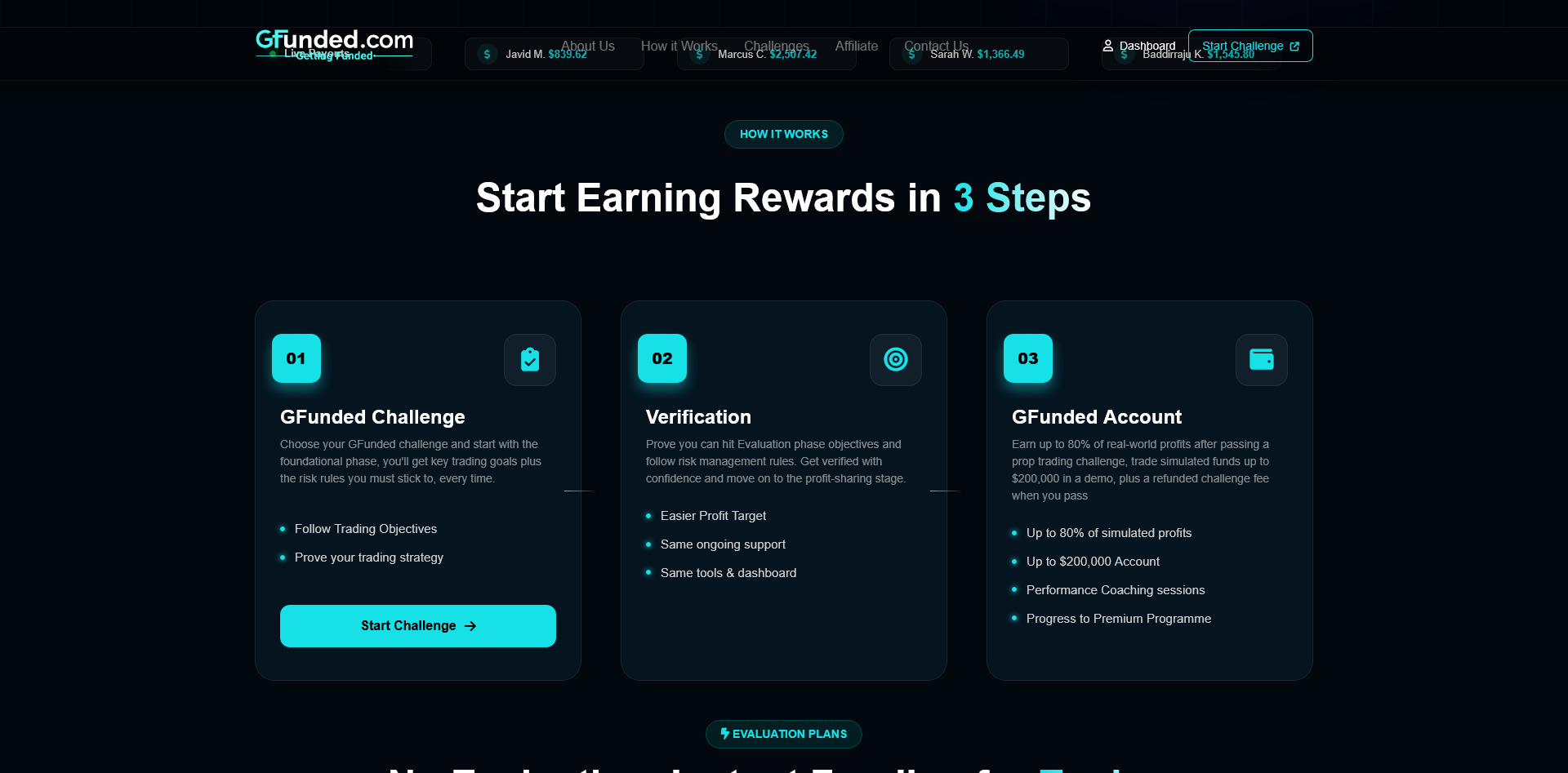
GFunded started in 2021 as a US-registered proprietary trading firm. They give traders access to substantial capital after passing an evaluation. Account sizes range from $10,000 to $200,000 and cost between $95 and $925. The scaling paths can reach up to $1 million with profit splits as high as 85%, which definitely sounds attractive. Most trading takes place on simulated accounts that still give real payouts.
Most traders don’t know that GFunded account failures rarely come from poor analysis. The biggest problems are mathematical constraints, timing issues, and strict rule enforcement. A typical evaluation has a 10% profit target with no set time limit. The daily loss limit stays around 4%, and maximum drawdown hits 6%. The headline promises look great – scaling plans up to $6.4M and platform choices like TradeLocker, DXTrade, and Match Trader. Yet the specific details ended up determining whether this setup works for your trading style.
This detailed review will get into GFunded’s rules, costs, and hidden requirements. You’ll learn if this prop firm matches your trading approach.
What Is GFunded Prop Firm and How Does It Work?
GFunded is a proprietary trading firm that gives traders a chance to use large amounts of capital without risking their own money. Most traders lose their own funds in traditional trading. But prop firms like GFunded let you trade with their capital and share the profits you make.
Simulated Trading with Real Payouts
Most traders think they’re getting real capital. The truth is that prop firms like GFunded use simulated accounts. Here’s the key difference – you make real profits. You can work on your skills in realistic market conditions. The best part? You won’t lose your life savings.
You’ll need to prove your trading skills through an evaluation first. After that, you get a funded account with the firm’s simulated capital. The trading feels just like the real thing because the profits are genuine. Traders usually keep 70-90% of their earnings. The firm takes what’s left.
The sort of thing I love about this setup is how it helps traders grow without needing lots of personal capital. You could have just $500 in your account but trade with $10,000 to $200,000 or more. Your success now depends on your skill rather than your bank balance.
Who Can Join and Country Restrictions
GFunded and similar prop firms accept traders from around the world. They do have some basic rules though. Every prop trading firm requires participants to be at least 18 years old to trade legally.
Notwithstanding that, regulatory requirements create many country restrictions. US Futures Commission Merchants (FCMs), clearing firms, brokers, and Office of Foreign Assets Control (OFAC) sanctions affect who can receive payouts or funding.
Traders from Afghanistan, Belarus, Cuba, Iran, Iraq, North Korea, Russia, Syria, and Venezuela can’t join most prop firms. Canadian traders face special rules too. Only those living in Alberta, Ontario, and Quebec can usually participate.
Compliance teams can reject applications from any location. This applies even if that place isn’t on the restricted list. These lists change often with new regulations. You should check if you’re eligible before you apply.
Evaluation vs Instant Funding Models
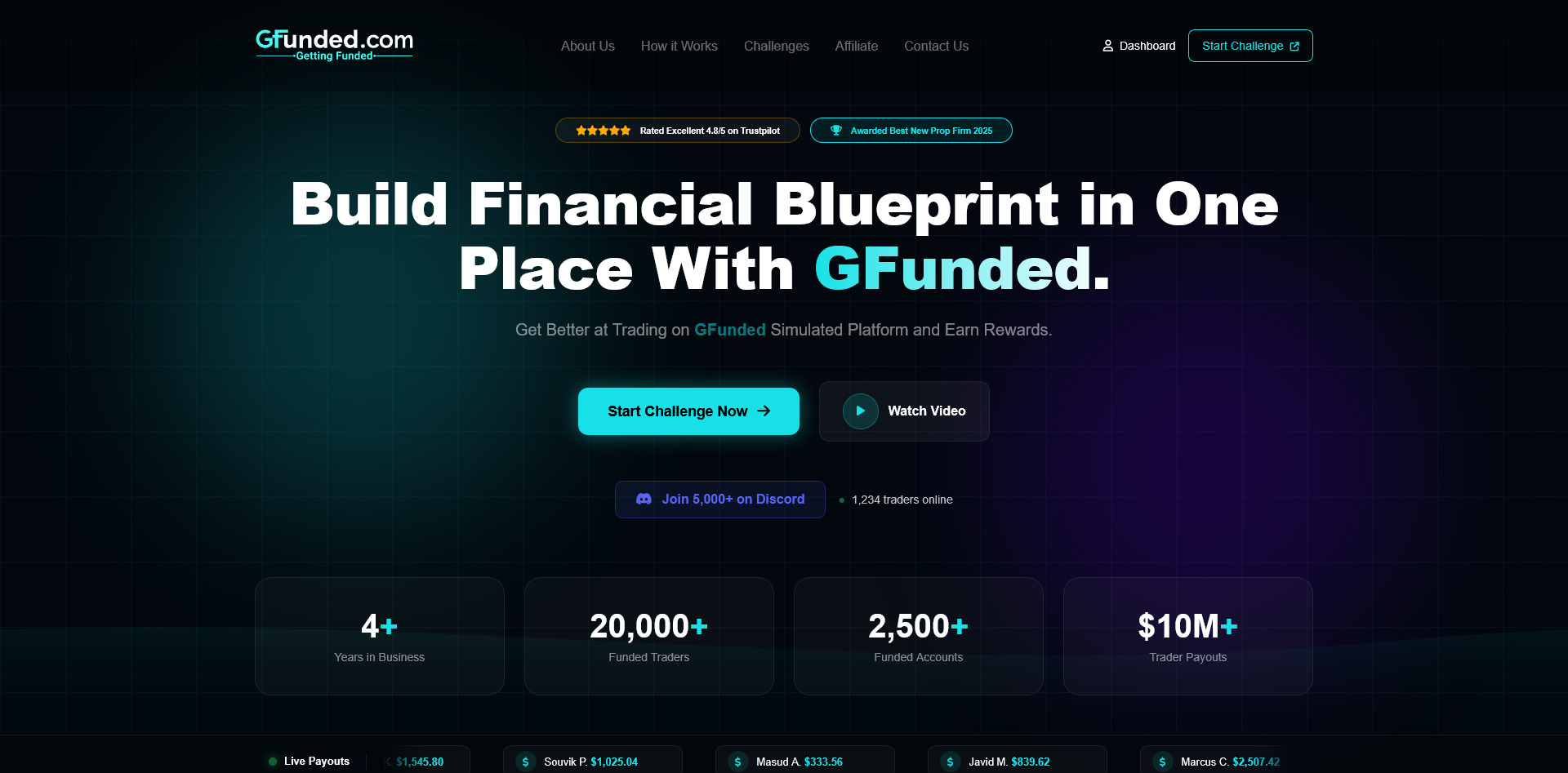
GFunded’s two paths to funding are quite different. You can choose between traditional evaluation or instant funding. Each option comes with its own costs, timelines, and profit-sharing deals.
The evaluation model needs you to pass a challenge first. Account access costs between $50 and $200, based on size. You get a simulated account with specific targets. Let’s say you need to make $3,000 profit on a $50,000 account while following risk rules. Pass this test and you’ll get a funded account where you share profits.
The instant funding model skips the evaluation part. You pay much more upfront – about ten times more than evaluation accounts. This is a big deal as it means that while you get funded right away, your profit share drops. You might only get 50-60% instead of the usual 80-90% from evaluation accounts.
Here’s the main difference: evaluation models reward patient, skilled traders. Instant funding gives quick access but costs you more long-term. Over months or years of trading, this profit split really adds up.
A trader making $5,000 monthly keeps $4,000-$4,500 with an 80-90% split. The same trader only gets $3,000 with a 60% split. That gap gets bigger as time goes on.
Evaluation Rules Explained: Profit Targets, Drawdowns, and Time Limits
Your trading success depends on GFunded’s prop firm evaluation rules. You need to pay close attention to these parameters before investing your money. These rules set the mathematical boundaries you must follow to get funding.
1-Step vs 2-Step Challenges
GFunded lets you choose between 1-step and 2-step evaluation models. Each option comes with its own requirements and benefits that match different trading styles.
The 1-step challenge gives you a quick path to funding through a single evaluation phase. You’ll need to hit an 8-10% profit target while staying within strict risk limits. Getting funded happens faster this way, but you have less room to make mistakes.
The 2-step challenge breaks down into two separate phases:
- Phase 1: You need 5-8% profit with standard risk parameters
- Phase 2: You focus on consistency with a lower 4-5% profit target
The 2-step model takes longer but gives you more breathing room with bigger drawdown limits—usually 5% daily and up to 10% maximum. This longer evaluation helps spot traders who show discipline and consistency rather than those who hit targets through lucky trades.
Daily Loss and Max Drawdown Limits
Risk management in GFunded’s evaluation process centers on daily loss limits and maximum drawdown restrictions.
Your daily loss limit caps what you can lose in one trading day—usually 2-5% of your account value. The limit resets at midnight (server time) and stops devastating single-day losses that come from desperate recovery attempts.
Maximum drawdown limits (MLLs) keep your account’s losses from its peak value between 4-10% of starting balance. These limits help the firm spot risk management problems early.
GFunded uses two types of drawdowns you need to watch:
- Static drawdown: Stays fixed below your starting balance
- Trailing drawdown: Moves up as your equity grows and locks at certain points
Your maximum loss limit might lock permanently at your starting balance once you hit a certain profit percentage with trailing drawdowns. This creates a safety net your account can’t fall below, no matter how much profit you make later.
Minimum Trading Days and Inactivity Rules
The best prop traders show they can be consistent, not just profitable. GFunded and similar firms use minimum trading day requirements and inactivity rules to ensure this.
Most evaluations need 3-7 minimum trading days to prevent passing through one lucky trade. Some firms count any day with at least one trade, while others want a minimum profit percentage (like 0.5% of account value) to mark it as a valid day.
Your funded account needs regular activity every 7-30 calendar days. Going inactive longer than allowed can lead to account breach or termination without getting your money back.
These rules test if you can follow structured trading guidelines—a skill you need to manage other people’s money. Combined with profit targets and drawdown limits, they create a system that finds disciplined, consistent traders instead of lucky gamblers.
A full picture of these rules before starting your GFunded Prop Trading Firm evaluation helps you avoid mistakes that get pricey and sets you up to succeed.
Trailing vs Static Drawdown: What Traders Must Know
The difference between trailing and static drawdowns could save your GFunded trading account from unexpected termination. Most traders chase profit targets. They often overlook these vital risk parameters that can make or break their success.
How Trailing Drawdown Works
Trailing drawdown creates a dynamic safety net that moves up as your account grows. It follows your highest achieved balance. Static drawdown stays fixed whatever your performance. The trailing version adjusts to protect profits and stops big reversals.
The math is simple: Trailing Drawdown = Highest balance achieved – Maximum allowed loss. To name just one example, see a $100,000 account with a $5,000 trailing drawdown. Your original limit sits at $95,000. Your balance grows to $105,000, and your new drawdown limit moves up to $100,000. Your account can’t fall below this threshold without breaching.
The biggest challenge with trailing drawdown is its one-way nature. The limit never moves down once it rises. Your account peaks at $105,000 and drops to $102,000? The trailing threshold stays at $100,000. This mechanism protects the firm’s capital but needs extra attention from traders.
Prop firms use two main trailing drawdown approaches:
- End-of-Day (EOD) Trailing: Updates only at the close of each trading day based on closed trades
- Intraday Trailing: Adjusts in real-time as your highest balance changes during active trading
Intraday trailing is stricter since it captures even momentary peaks in your account value.
Equity vs Balance-Based Limits
A significant difference exists between equity-based and balance-based drawdown calculations. Many traders miss this point and breach their accounts.
Balance-based drawdowns look at realized profits and losses from closed trades. Equity-based calculations track unrealized (floating) profits and losses from open positions. This creates two different risk environments:
| Parameter | Balance-Based | Equity-Based |
|---|---|---|
| Calculation | Closed trades only | Includes open positions |
| Risk Level | Lower, more forgiving | Higher, stricter |
| Trading Style Fit | Better for swing trading | Suits day trading/scalping |
| Recovery Potential | Possible before closing positions | Limited by floating P&L |
Equity-based trailing drawdown is tougher because unrealized profits can push your limit higher. Your drawdown limit rises if a trade floats $2,000 in profit and pushes your account to a new high. This happens even if you never close that position. Market reversal before exit might breach your account while you’re still profitable overall.
Examples of Breach Scenarios
Many traders breach their accounts without knowing why. Here’s a common scenario with equity-based trailing drawdown:
You start with a $50,000 account and a $2,500 trailing drawdown (5%). Your original limit is $47,500. You open a position that gains $1,000 in profit. Your equity reaches $51,000. This pushes your drawdown limit to $48,500. A market reversal drops your equity below $48,500. You breach—even though you’re still up $500 from your starting balance.
Overnight positions cause another common breach. You hold a position with $1,500 floating profit at market close. Equity-based trailing moves your limit up. The market gaps down next morning before you can act. You might breach before you even get a chance to respond.
The most surprising breaches happen to profitable accounts when traders don’t understand how drawdown trails equity instead of balance. A single large position temporarily spikes your equity before reversing. This can trigger a breach despite your positive overall performance.
These details matter when trading with GFunded or any prop firm. They help protect your account and maximize your payout opportunities.
Hidden Costs in GFunded Plans: What’s Not Obvious
The price tag you see on GFunded prop firm accounts doesn’t tell the whole story. A web of extra costs can make your total investment get pricey when you trade with this firm.
Reset Fees and Retake Costs
Did you fail your evaluation? You’ll need to pay reset fees. Most traders don’t pass on their first try, so these reset costs become part of your trading trip with GFunded. Standard evaluation accounts charge reset fees of 40-60% of what you paid originally. This varies based on your account size.
Reset policies change with account sizes:
- $10K-$25K accounts: Reset fees around $50-90
- $50K-$100K accounts: Reset fees from $100-200
- $150K-$200K accounts: Reset fees from $250-400
You’ll pay these fees right away if you break any trading rule. This happens even if you go over your maximum drawdown by just 0.01% or trade during news events without the right add-on. GFunded won’t give you money back if you fail early in your evaluation. The reset cost stays the same whether you break a rule on day one or after weeks of careful trading.
Traders who follow the scaling plan face bigger reset costs as they move up. Breaking rules on a $400K account could cost you $600+ to reset, so mistakes become more expensive as you grow.
Add-ons for News Trading and Weekly Payouts
GFunded‘s basic price doesn’t include features you might expect to come with it. News trading add-ons and weekly payout options cost extra.
News trading add-ons cost between $39-99 based on account size. You need this to trade during big economic announcements. Without it, breaking this rule can end your account. You must stay out of trades from 15 minutes before until 15 minutes after major news like Non-Farm Payrolls, FOMC decisions, or CPI data.
Weekly payouts will cost you $29-79 each month, instead of the monthly payouts that come with basic accounts. This small convenience adds up fast and could cost you hundreds more each year.
The platform access fee isn’t easy to spot in their marketing. Your first month comes with the evaluation, but after that, you’ll pay $15-30 monthly depending on your choice of TradeLocker, DXTrade, or Match Trader.
Refundable Fees: What It All Means
GFunded calls many evaluation costs “refundable,” but there’s more to this story than meets the eye.
You won’t get direct refunds. Instead, your profit splits pay back your initial fee first. This means smaller payouts until you clear this amount. The refund only covers your evaluation fee, not any reset costs or add-ons you bought.
If you break rules on your funded account before making enough profit to cover your evaluation cost, you lose what’s left of your refund. Many traders never see their full “refundable” amount, even after passing their evaluation.
The small print has one more catch: refunds usually work only for one-step challenges. Two-step evaluations might give you partial refunds or none at all, depending on what deals were running when you signed up.
GFunded Pricing Breakdown by Account Size
GFunded’s pricing structure shows big differences in costs based on account sizes and funding models. Your potential returns as a trader depend on multiple tiers with distinct costs and profit-sharing arrangements.
$10K to $200K Evaluation Plans
GFunded offers evaluation accounts from $10,000 to $200,000. The prices scale up with account size. A basic $10,000 account costs about $148 with promotional discounts. The largest standard $200,000 account costs around $1,143
You can choose from several options based on your capital needs:
- $25,000 accounts: About $233
- $50,000 accounts: About $335
- $100,000 accounts: About $573
- $150,000 accounts: About $828 [233]
These prices often include temporary discounts. A $100,000 account’s regular price might be $675 before any promotional codes [233].
Most evaluation plans come with similar features. You need to hit a 10% profit target. Daily loss limits stay around 5%. Maximum drawdown allowances go up to 10% with add-ons . The profit share starts at 75% but can reach 90% through optional upgrades at checkout ]
Instant Funding Plan Costs
Instant funding accounts let you skip the evaluation phase but cost much more. While GFunded’s exact rates vary, these accounts usually cost 5-10 times more than regular evaluation accounts.
Here’s how similar firms price their instant funding accounts:
| Account Size | Approximate Cost Range |
|---|---|
| $5,000 | $111-$263 |
| $10,000 | $216-$527 |
| $20,000 | $391-$1,055 |
| $40,000 | $741-$2,111 |
| $80,000 | $1,315-$4,223 |
Experienced traders with proven strategies often prefer these accounts. They can start trading right away without evaluation challenges.
Scaling and Profit Split Tiers
GFunded gives traders 75% of profits as standard. Your share can increase based on how well and consistently you trade. Most prop firms use tiered profit splits to reward success.
The market typically follows these patterns:
- Traders start with 70-80% profit splits
- Consistent performance bumps this to 80-90%
- Top performers can earn 90-100%
Some firms use structured systems:
- First payout: 90% profit split, capped at 0.5% of initial balance
- Second payout: Capped at 5% of initial balance
- Third+ payouts: Capped at 10% of initial balance
Other models use tier-based progress:
- Tier 1: 30% profit split (after first payout)
- Tier 2: 70% profit split (after three approved payouts)
- Tier 3: 99% profit split (after six approved payouts)
Traders can grow their accounts substantially. Most prop firms let you scale up to 4x your starting capital. Some programs even offer paths from $200,000 to $800,000 or more
Platform Experience: TradeLocker, DXTrade, and Match Trader
Your success in the GFunded ecosystem depends on your choice of trading platform. TradeLocker, DXTrade, and Match Trader each bring something different to the table – from how fast they execute trades to their analytical tools.
Platform Features and Charting Tools
Each platform comes with unique features that match different trader’s priorities:
TradeLocker keeps things simple with a clean, minimalist design. It stands out as the most basic of GFunded’s platforms and cuts down on distractions by showing only what you need. You can execute trades with just one click, without any popup confirmations – this really helps when markets get volatile. The platform works with TradingView charts, which gives you access to hundreds of technical indicators while keeping everything neat. New traders will appreciate how it strips away unnecessary complexity.
Match Trader finds the sweet spot between powerful features and a user-friendly interface. It uses TradingView charts too, which opens up a world of technical analysis tools. You can set up your workspace just the way you like it – something experienced traders really value. Thanks to Progressive Web App technology, you can switch between devices smoothly and your settings sync automatically.
DXTrade shines when it comes to trading different types of assets. Its modern design works well for traders of all ages with an attractive, easy-to-use layout. You can customize it extensively, so no two setups look the same. The platform includes a powerful admin and risk management console that lets you keep tight control over your exposure.
Execution Speed and Order Management
The difference between making money and missing out often comes down to execution speed:
Match Trader really delivers here – its ultra-fast matching engine handles over 50,000 transactions per second with less than 3 milliseconds of delay. This blazing speed makes it perfect for high-frequency trading where every microsecond counts. The platform reduces lag substantially, which helps predict executions better – a vital factor for strategies that need precise timing.
cTrader (on select GFunded accounts) keeps up a steady pace without much lag in normal conditions. While it’s not built specifically for ultra-high-frequency trading, it handles most trading styles reliably and performs well during economic announcements.
TradeLocker runs at fair speeds that casual traders will find adequate. It focuses on being reliable rather than being the fastest option, which suits beginners who don’t need lightning-quick execution. You might notice it takes a bit longer to execute during market volatility or major economic news compared to other platforms.
Which Platform Fits Your Style?
Let your trading style guide your platform choice:
Algorithmic or quantitative traders should look at Match Trader first. Its performance specs work great for high-frequency strategies, and its technical setup supports complex trading systems. You can implement strategies reliably with minimal slippage thanks to precise execution metrics.
Technical analysis fans will do well with either Match Trader or TradeLocker because both use TradingView. You get hundreds of indicators, various chart types, and advanced drawing tools with either one. Your choice might depend on whether you value execution speed more than a simple interface.
Mobile-first or on-the-go traders will find TradeLocker works best. It runs smoothly on any device, even with poor internet connections. One-click trading becomes especially useful when you’re trading from your phone or tablet.
Multi-asset traders who want to go beyond forex should check out DXTrade. It offers the most complete solution for trading different asset classes and business models. You can adapt various trading styles within one platform environment.
Research from 2025 shows that 75% of traders want advanced charting in their platforms, which explains why all three GFunded options come with strong visual tools. The data also shows that 80% of new investors trade using mobile apps, which aligns perfectly with TradeLocker’s mobile-first approach.
Payout Process, KYC, and Common Delays
Making money with GFunded’s evaluation is great, but getting paid needs attention to detail. Your path from successful trades to cash involves steps that affect how fast you get your funds.
Payout Schedule and Minimums
GFunded’s payout structure requires specific trading minimums. Most prop firms want you to have at least five winning trading days before you can withdraw. These days don’t need to be back-to-back, but they must show you can make money consistently—usually $150 or more in net profit per day.
You might need to show more profits for future withdrawals after your original payout. The minimum you can take out ranges from $250-500 based on your account size. The maximum limits work in tiers:
- First 1-5 payouts: You can get $1,000-3,000 or a portion of your balance
- Later payouts: The limits go up or switch to percentage-based
The process takes time – 1-3 business days to approve and 3-10 business days to transfer, depending on how you want to get paid.
KYC Requirements and Approval Time
You must complete KYC checks before your first withdrawal. This step proves who you are and meets financial rules. The KYC process starts after you pass your challenge and before any withdrawal requests, even if other accounts have verified you.
Regular KYC needs these documents:
- Government-issued photo ID (passport, driver’s license, or national ID)
- Recent proof of address within 90 days (utility bill, bank statement)
- A selfie that matches your ID
The verification usually takes 24-48 hours. Your money stays put until KYC approval comes through.
Drawdown Rebase After Withdrawals
Most prop firms set your maximum loss limit at your starting balance plus $100 after your first payout. This buffer keeps your account safe after taking money out.
Two successful payouts from one account often lead firms to reset your minimum loss limit. This change lets you withdraw more of your profits – from 50% to 80%. Your account and trailing drawdown limit go back to where they started with each new withdrawal.
This reset system helps both you and the firm by keeping risk levels safe even when you take out big profits.
Who GFunded Is Best For (And Who Should Avoid It)
You need to match your trading style with GFunded’s structure to succeed with this prop firm. The truth is, not every trader can excel under their specific conditions.
Best Fit: Risk-Controlled, Consistent Traders
GFunded is perfect for disciplined traders who put risk management first. The most successful prop traders typically stick to 1-2% capital risk per trade, and they keep this position sizing whatever their confidence level. Traders who approach this as a business rather than a game tend to do well in this environment.
The right fit for GFunded has already tested strategies with smaller accounts and knows exactly when to jump in and out of positions. They also have the patience to wait for the perfect setup. The firm’s drawdown limits mean you must keep your emotions in check, even during rough patches.
Not Ideal For: High-Frequency or MT4 Users
High-frequency trading strategies are strictly off-limits at GFunded – that means no trades held under 60 seconds with high volume. On top of that, it doesn’t work with MT4, so you’re out of luck if that’s your go-to platform.
Tick scalping, arbitrage, and news scalping strategies don’t fly here – they break the firm’s terms. The company also won’t let you hedge across multiple accounts or team up with other traders for opposing positions.
Quick Checklist Before You Buy
Make sure these boxes are checked before getting a GFunded account:
- Your strategy fits the minimum trade duration rules
- You can keep risk at 1.5% or less per trade idea
- You don’t need MT4 tools to trade
- You get how trailing drawdown works
- You stay cool and collected during drawdowns
- You can trade without news scalping or other banned practices
Conclusion
GFunded is a chance for traders to access capital without risking their own money, but you need the full picture beyond marketing promises to succeed. Of course, getting accounts from $10,000 to $200,000 with potential scaling to $1 million sounds great. The reality has many restrictions and hidden costs that traders don’t notice until it’s too late.
The trailing drawdown mechanism creates a tough spot where profitable traders can breach accounts through momentary equity spikes. These mathematical limits and strict rules about news trading and minimum trading days make GFunded a better fit for disciplined, methodical traders rather than aggressive scalpers or high-frequency strategists.
On top of that, reset fees of 40-60% of original costs add up fast, especially since most traders fail their first evaluation. Platform fees, weekly payout options, and news trading add-ons mean your total investment could be nowhere near the advertised price.
Your trading approach should line up with the platform you pick—TradeLocker, DXTrade, or Match Trader. Technical analysts might like Match Trader’s strong charting features, while mobile-focused traders could do better with TradeLocker’s accessible interface.
The 75% profit splits look good on paper but come with big strings attached regarding withdrawal timing, KYC requirements, and performance metrics. Most traders never see their full profits because their accounts breach before they can make substantial withdrawals.
GFunded works best if you’re good at risk management, keep position sizes under 1.5% per trade, and trade patiently rather than emotionally. Traders who need MT4 or use high-frequency strategies should look elsewhere.
My bottom line? GFunded offers real funded trading chances but you must follow rules carefully and manage risk well. Your success depends more on understanding mathematical limits than market analysis skills. Take time to think over whether your trading style fits these rules before spending money—or you might end up like most others who pay for evaluations without ever getting funded.
Key Takeaways
Understanding GFunded’s complete structure—including hidden costs and strict rules—is essential before investing in their prop trading evaluations.
• Hidden costs add up quickly: Reset fees cost 40-60% of initial purchase, plus monthly platform fees ($15-30) and optional add-ons for news trading ($39-99) significantly increase total investment beyond advertised prices.
• Trailing drawdown creates unexpected breaches: Your maximum loss limit moves up with equity peaks but never down, meaning profitable traders can breach accounts through temporary profit spikes that later reverse.
• Success requires strict discipline over market skills: Most failures result from rule violations and mathematical constraints rather than poor trading analysis—position sizes must stay under 1.5% per trade with consistent risk management.
• Platform choice impacts daily trading experience: TradeLocker suits mobile traders, Match Trader offers ultra-fast execution for technical analysts, while DXTrade provides multi-asset capabilities—but MT4 isn’t supported.
• GFunded works best for patient, rule-following traders: High-frequency scalpers, news traders without add-ons, and emotional traders should avoid this firm due to strict prohibited practices and drawdown mechanics.
The key insight: Your trading personality and risk discipline matter more than market analysis skills when determining GFunded compatibility. Most traders pay for evaluations without reaching funded status due to rule violations rather than unprofitable strategies.
FAQs
Q1. What are the main hidden costs associated with GFunded prop trading accounts? Hidden costs include reset fees (40-60% of initial purchase price), monthly platform fees ($15-30), and optional add-ons like news trading permissions ($39-99). These can significantly increase your total investment beyond the advertised prices.
Q2. How does GFunded’s trailing drawdown work? GFunded uses a trailing drawdown that moves up with equity peaks but never down. This means your maximum loss limit increases as your account grows, but doesn’t decrease if your equity falls. Traders can breach their accounts through temporary profit spikes that later reverse, even while still in overall profit.
Q3. What trading platforms does GFunded offer? GFunded offers three main platforms: TradeLocker (best for mobile traders), Match Trader (ultra-fast execution for technical analysts), and DXTrade (multi-asset capabilities). However, MT4 is not supported.
Q4. What are the typical payout requirements for GFunded accounts? Most prop firms, including GFunded, require at least five winning trading days before qualifying for a withdrawal. There’s usually a minimum withdrawal threshold of $250-500, depending on account size. Initial payouts are often capped at $1,000-3,000 or a percentage of account balance.
Q5. Who is GFunded best suited for? GFunded is best for disciplined traders who prioritize risk management and can consistently maintain position sizes under 1.5% per trade. It’s ideal for those who approach markets with patience rather than emotional impulse. However, it’s not suitable for high-frequency scalpers, news traders without add-ons, or those heavily reliant on MT4 functionality.